Aerpiemaahtoe invites visitors to reflect on how different knowledge systems shape our individual worldviews and whose lived experiences are recorded in history. The exhibition is presented by Accelerator and Gaaltije Saemien Museume in Staare [Östersund] in collaboration with Bildmuseet in Ubmeje [Umeå] and features works by the artists Sissel M Bergh, Julia Rensberg, Elme Ämting and Avant Joik. The artists work with installation, sculpture, video, sound and performance.
 Aerpiemaahtoe är sydsamiska och kan översättas till ”traditionell kunskap” eller ”arvskunskap”.
About the exhibition
Aerpiemaahtoe is Southern Sàmi and can be translated as ‘traditional knowledge’ or ‘ancestral knowledge’. As a contemporary art institution situated at Stockholm University, a centre for academic knowledge production, Accelerator’s programme in 2026 focuses on different knowledge systems and how these are valued, managed, and prejudiced. The exhibition coincides with the presentation of findings from the Truth Commission for the Sámi People, the governmental mandate of which has been to map and “increase the general public understanding of Sámi history and how historical injustices affect the conditions for Sámi people today.”
The artists in the exhibition engage with Sámi knowledge traditions that historically have been marginalised and silenced. They explore how history writing has erased traces of Sámi life, address historical injustices, and ask whether, or how, reconciliation is possible within continued Nordic colonialism.
Aerpiemaahtoe is based on knowledge systems rooted in the relationship between humans, animals, and the land—a reciprocal way of understanding and engaging with the world. It is a living knowledge tradition that is constantly evolving and, with resilience, passed down through generations in language, storytelling, the work of the hand, and lived experiences.
Works in the Exhibition
Julia Rensberg
Dubpene gaskene, 2025 [Over there in the in-between]
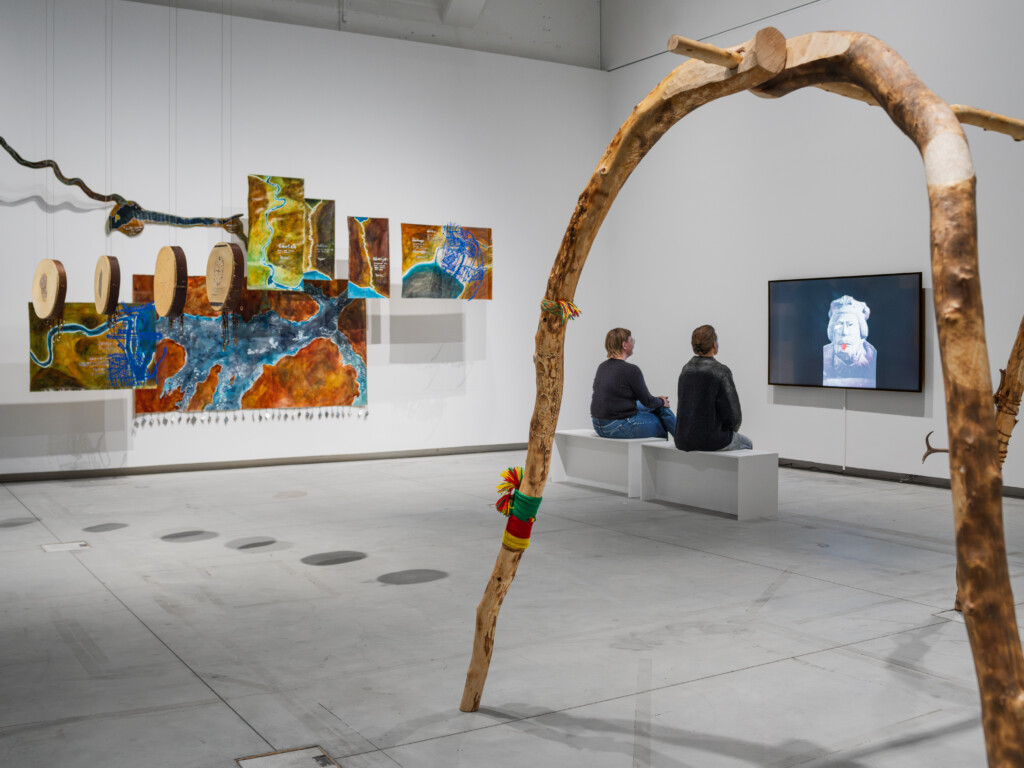
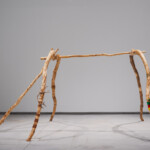
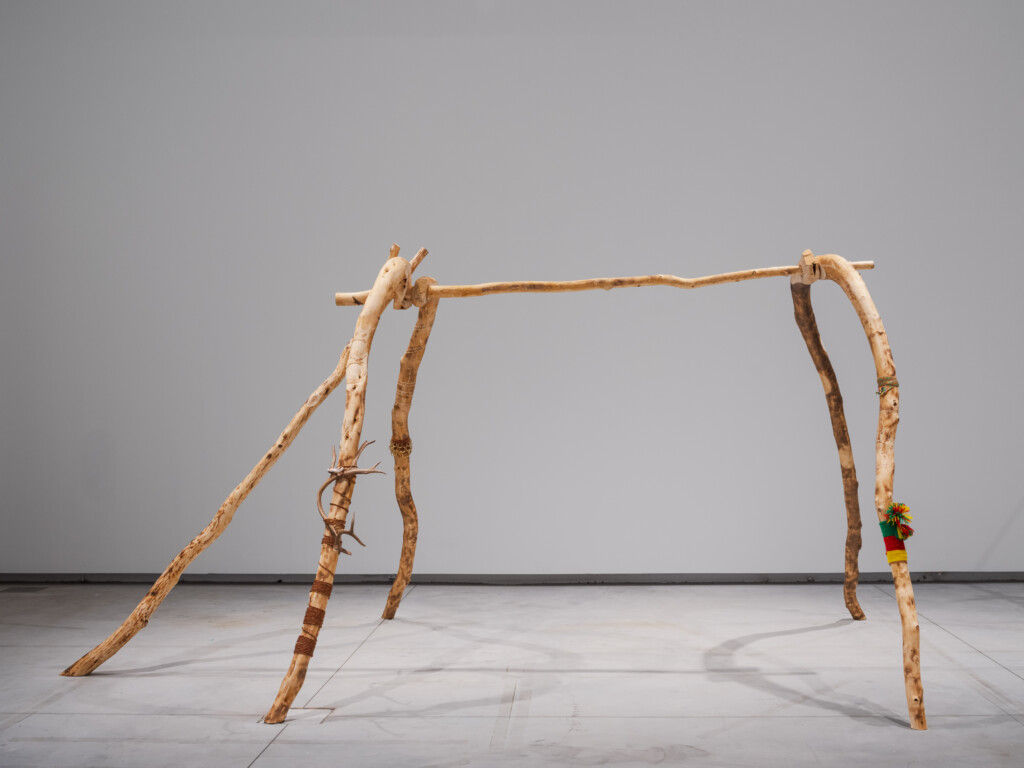
Otnerassh [sturdy arched poles] form the framework of a derhviegåetie [Southern Sami turf hut] – a home and a place of warmth, security and community. This is how Julia Rensberg’s family lived in earlier generations. In the 1950s, the state forcibly re-
located the family from Fjällsjön to the newly built Brändåsen in Härjedalen. The huts were demolished or burnt down to prevent the families from returning.
In Dubpene gaskene, the bow-shaped poles bear the traces of what was lost and what lives on. Family portraits and symbols drawn from the Sámi traditional patterns are carved into the birch wood. The lasso ring attached to one of the poles carries knowledge of the relationship between humans, reindeer, and the land
Daebpene veasoem, 2026 [All round here I live]
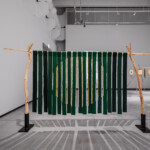
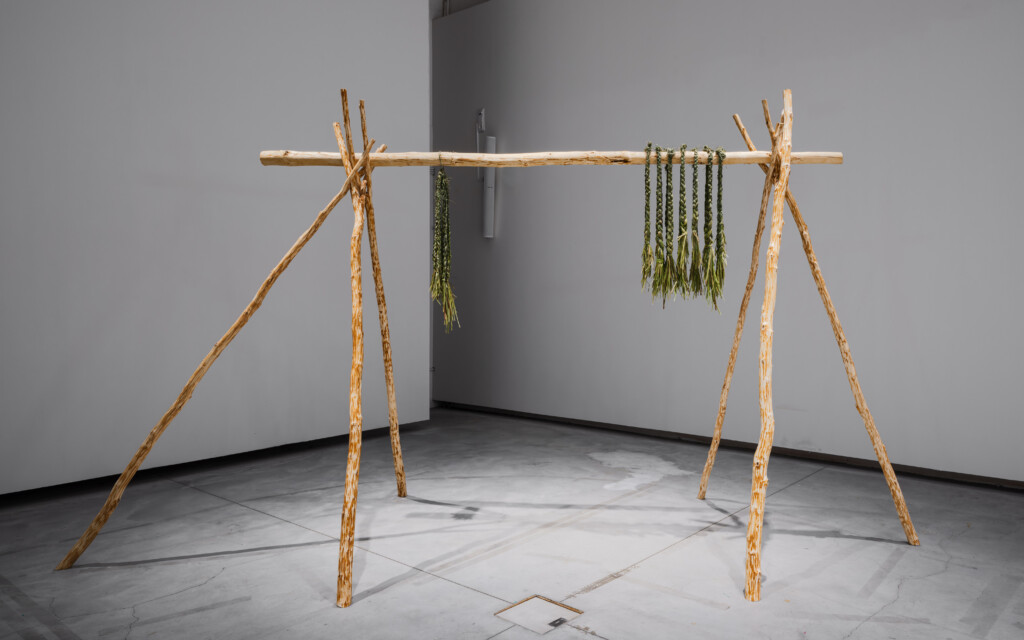
In the exhibition, Rensberg presents two load-bearing structures created using traditional Sámi building techniques. They respond to and are shaped by the site’s conditions. In Daebpene veasoem, suejnieh [shoe hay] is hung out to dry – a type of sedge that is softened and used in shoes to keep feet warm and dry.
Rensberg explains:
Suejnieh [shoe hay] is gathered during tjakjte-giesie [late summer]. Not too early and not too late. The grass must be tall but not yet yellowing. To know when the time is right, you need to know the place. Return to it, follow the seasons and observe the subtle changes in the landscape. The knowledge lies in the relationship with the place. In the hands that gather and weave
For Indigenous peoples, it is a way of living with the land rather than off it. Of moving through and living with a landscape without depleting it. The reassurance that the place provides what you need and can continue to do so for those who come after is fundamental for us.
We have lived here. We live here.
Elme Ämting
Sjeltie 1725, 2025 [Åsele 1725]
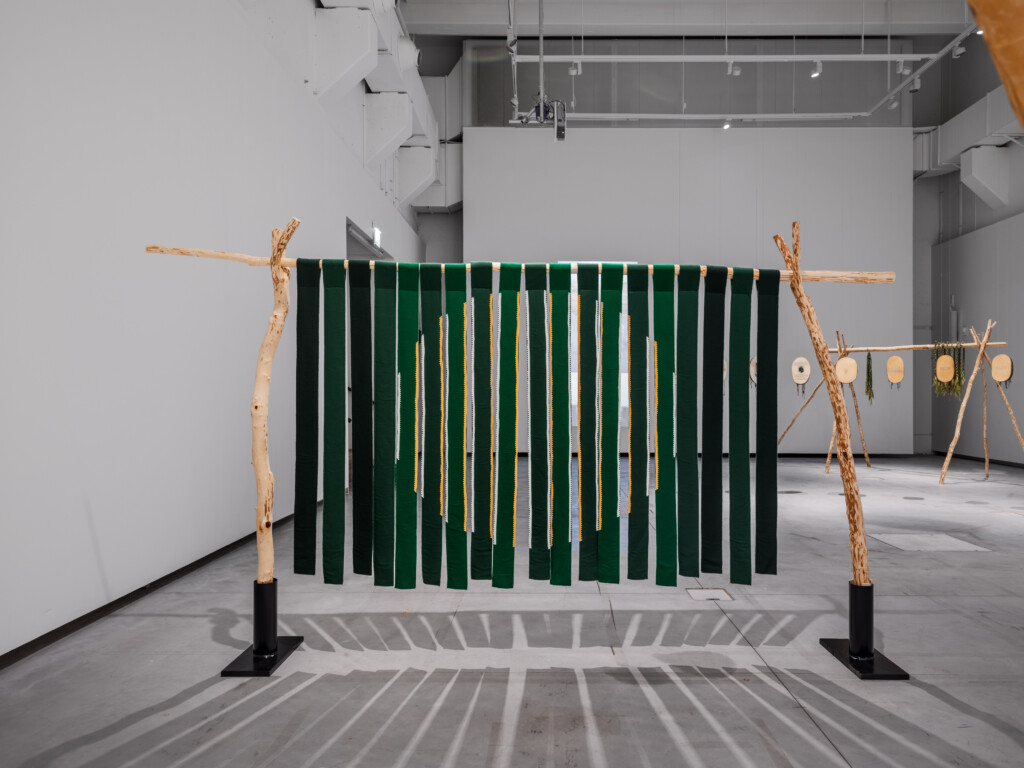
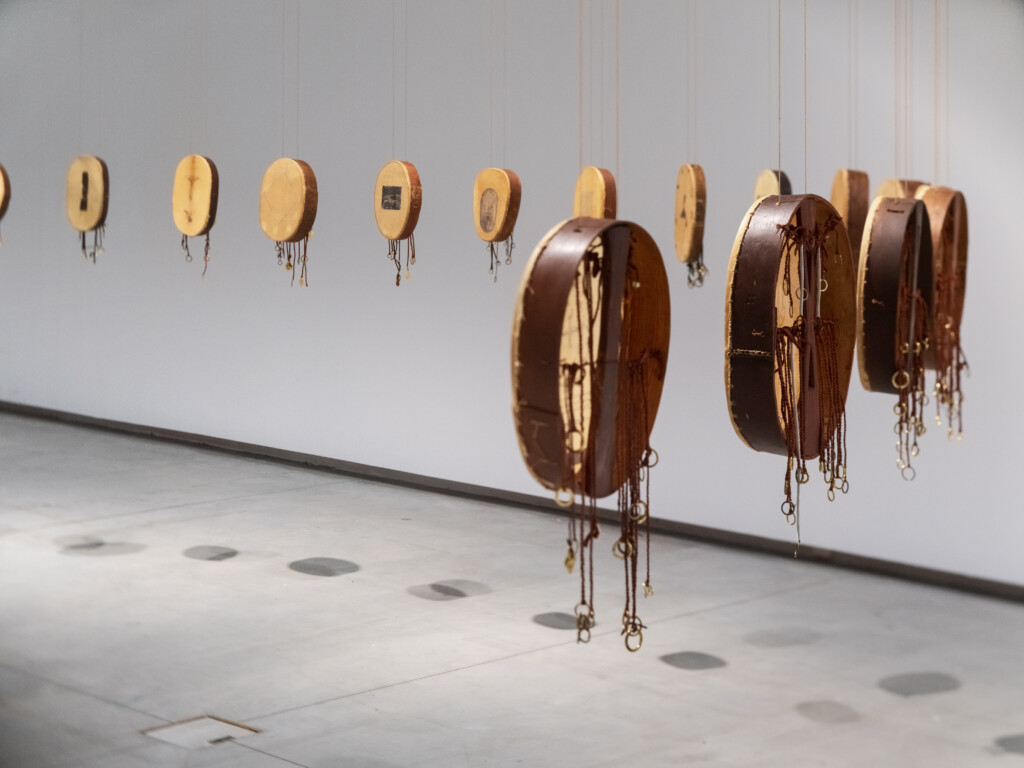
The work takes its starting point in Sjeltie [Åsele] in 1725, when 26 Sámi drums were confiscated during a church visitation. In her installation, Ämting uses the same number of drums as a reminder of the violence directed against Sámi culture and an entire system of knowledge. The confiscation in Sjeltie was part of the church’s and the state’s efforts to Christianise the Sámi, a process that led to the banning, destruction, or removal of drums from the communities where they held spiritual and practical knowledge.
The confiscated drums were eventually incorporated into museum collections—a contradictory history, marked by both erasure and preservation. Of the 26 drums that were to be taken to Stockholm, only 25 arrived. According to an oral account, the 26th flew away.
The drum motifs are sourced from various archives, spanning from historical times to the present. They bear traces of events, places, and spiritual practices, but also of the colonial gaze that has long shaped how Sámi spirituality has been
described and documented.
Sissela M Bergh
Bissie baektie (bak kulisse), 2025/2026 [Sacred Mountain (behind the scenes)]
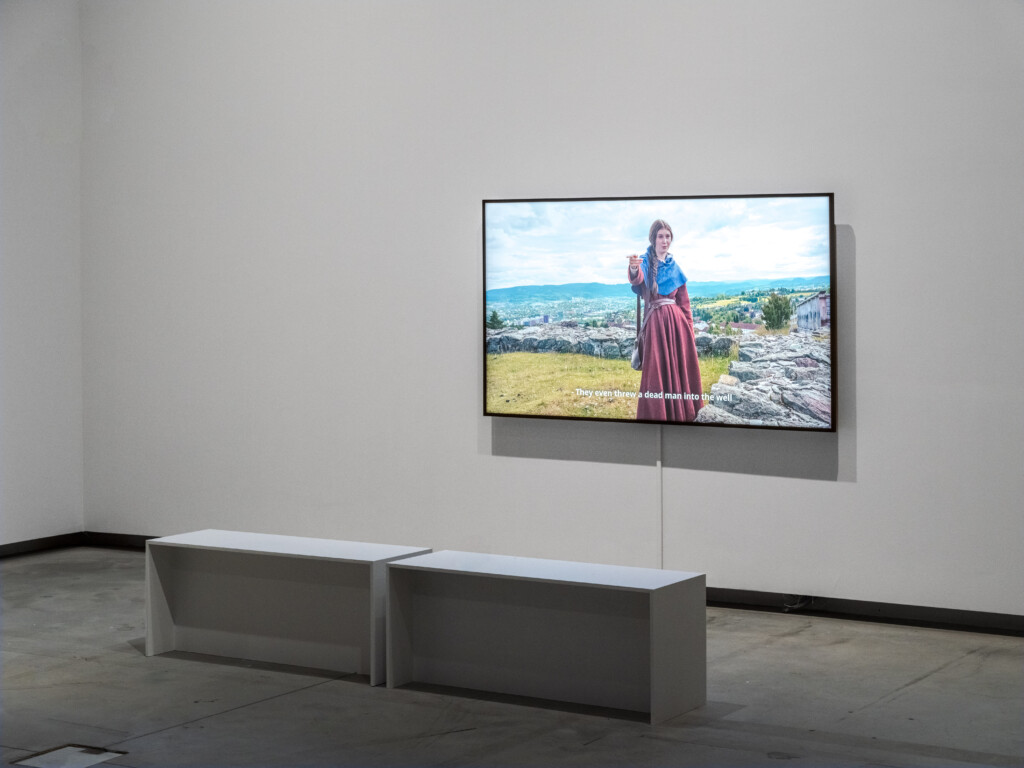
In Bissie baektie, Bergh traces how layers of the national historical narrative over the centuries have erased Sámi presence in the Sverresborg area of south-western Tråante [Trondheim].
In the mid-18th century, Norway’s first historian, Gerhard Schøning, shaped the narrative of Norway as the Germanic cradle of civilisation. Through a colonial process, this narrative gradually became established as the official image of the Norwegian nation-state. Drawing on archival material, oral traditions and the voices of the land itself, Bergh seeks to deconstruct that image.
Tråante voenen, 2025/2026 [Belonging to the Trondheimsfjord]
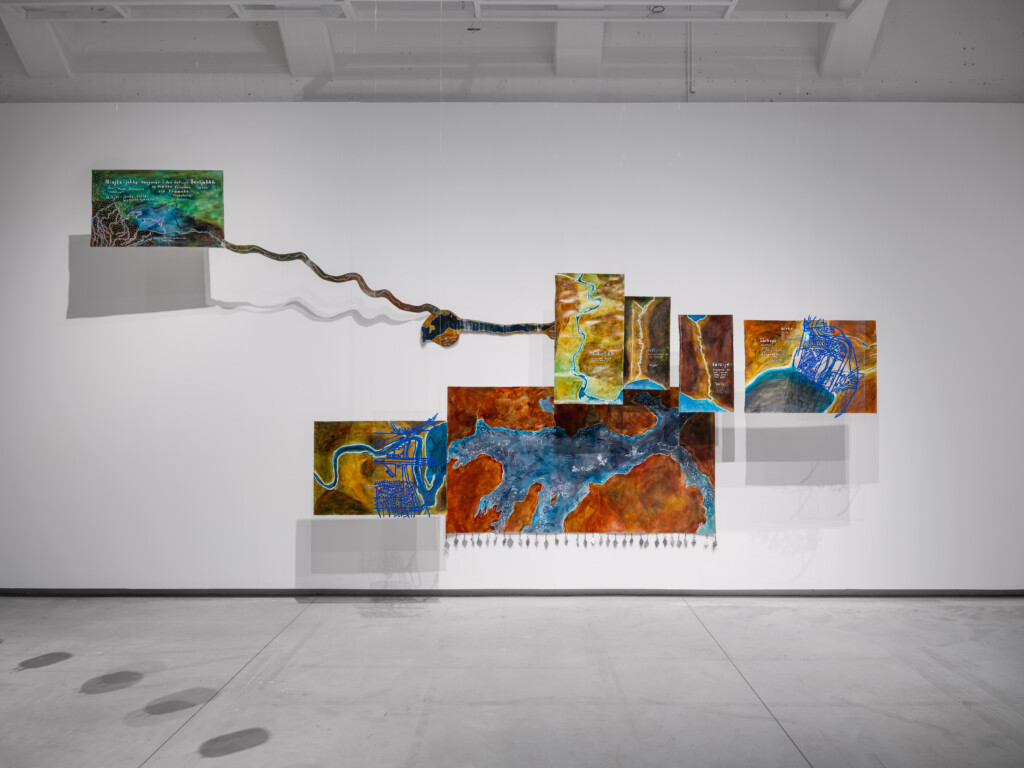
In Tråante voenen, Bergh depicts the fjord landscape around Tråante [Trondheim]. In these paintings, Bergh brings to light erased Sámi geographical names that she has traced through oral sources and historical archives. Sami land names often convey specific knowledge about a location, as they can describe particular site-specific characteristics, such as how flora and fauna behave and migrate throughout the seasons. Bergh juxtaposes the knowledge embodied in these names with today’s exploitation and control of natural resources, using transparent layers depicting the sites’ contemporary infrastructure.
The work forms part of the artist’s ongoing project to re-inscribe Southern Sámi culture and presence within a landscape where it has long been excluded from official maps and national historiography.
Avant Joik
Can We Reconcile?, 2025
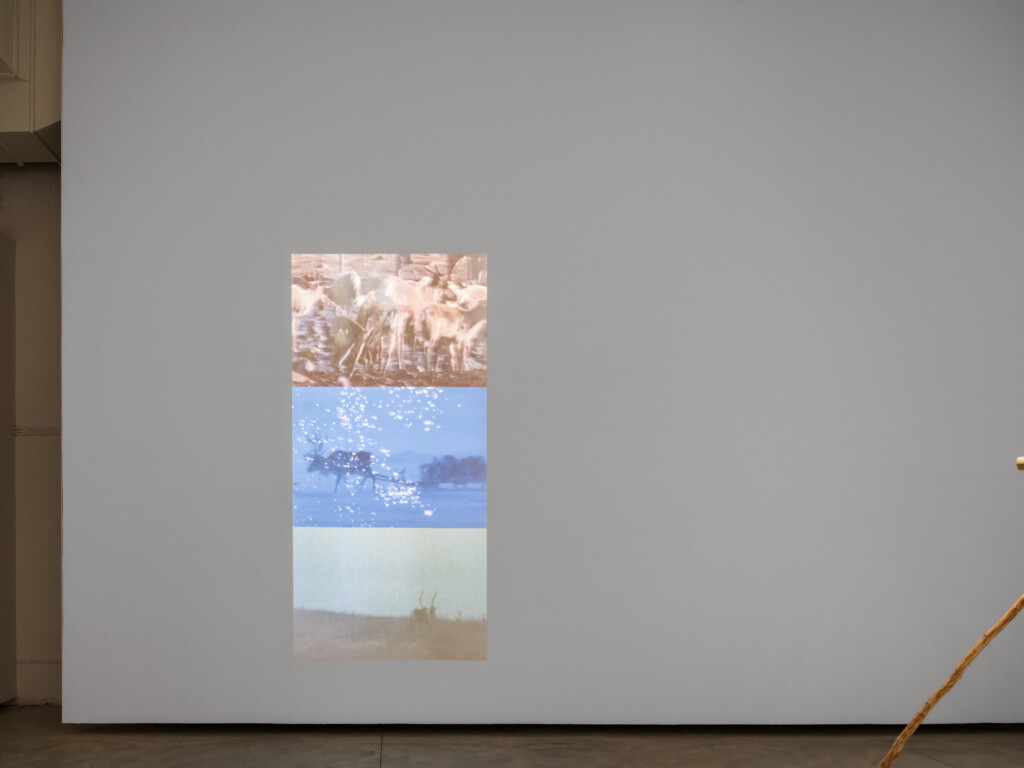
In Can We Reconcile?, Avant Joik asks whether reconciliation can take place while Nordic colonialism never ceased. The work builds on the film Skierri – Land of the Dwarf Birches (1982), which was the result of a collaboration between the director Markku Lehmuskallio and the Sámi reindeer herder and activist Jouni S. Labba. It is considered one of the first Sámi feature films and was shot near the Three-Country Cairn, where Finland, Sweden and Norway meet. By interweaving documentary observations and field recordings with fiction, the film depicts the tensions between the Sámi way of life and colonial structures. In Can We Reconcile?, Avant Joik brings together their own visual material, sound composition, and joik alongside clips from Skierri.
About the Artists
Julia Rensberg
Julia Rensberg is a South Sámi artist with roots in Ruvhten Sijte, based outside Jåhkåmåhkke [Jokkmokk]. In her practice, she explores issues related to Sami cultural heritage, sustainability, and identity through duodji, installation, photography, and textiles. Through traditional working methods, materials, utilitarian objects, and building structures, she explores the interplay between humans, nature, and the land as a reciprocal, living relationship shaped by shared memories, experiences, and responsibilities.
Elme Ämting
Elme Ämting was born in Ubmeje [Umeå], is based in Kramfors, and has her South Sámi roots in the area around Sjeltie [Åsele]. Recurring themes are personal experiences of cultural loss and mental illness explored through sculpture and installation. Ämting often returns to narratives of historical oppression in works that bring together different systems of knowledge: historical archives and orally transmitted craft knowledge.
Sissel M Bergh
Sissel M Bergh is a South Sámi artist, researcher, and filmmaker based in Tråante [Trondheim]. A recurring theme in her interdisciplinary practice is how social relations and official interpretations of history have been shaped by an interplay of myths, facts, and deliberate lies. Bergh treats language as an archive of history and land, and linguistic tradition serves as a tool for uncovering layers of the past and reconnecting with the land.
Avant Joik
Avant Joik is a collaborative project by Matti Aikio, Katarina Barruk, and Maja Solveig Kjelstrup Ratkje. Katarina Barruk, who grew up in Lusspie [Storuman] and Gajhrege [Gardfjäll] and is now based in Oslo, blends vuöllie with contemporary pop performed in the critically endangered Ume Sami language.
Composer Maja Solveig Kjelstrup Ratkje from Tråante [Trondheim] approaches the voice as an instrument. Her work ranges from avant-garde vocal techniques to compositions for orchestra, opera, and political sound art. Matti Aikio, an artist and activist from Finnish Saepmie, works with installation and video. His art centres on Indigenous peoples’ relationship with nature, land rights, and the ecological consequences of colonialism




Credits
Curators: Anneli Bäckman och Therese Kellner
The exhibition is presented in collaboration with Gaaltije Saemien Museume and developed through the multi-year exhibition project Art & Truth-Telling, produced by Bildmuseet and Gaaltije Saemien Museume, to acknowledge the work of the Truth Commission for the Sámi people on the Swedish side of Saepmie. Art & Truth-Telling has taken various forms across different collaborations and highlights truth-telling as a process, as well as art’s potential to articulate both personal and collective truths.
There are nine Sámi languages, and the Gaaltije Saemien Museume operates in the Southern Sámi region. Accelerator has therefore chosen to use Southern Sámi spelling in its communications for this exhibition – a way of highlighting the linguistic diversity.
Thanks to Johan Sandberg McGuinne, who translated the program to South Sami.