
Out of Character
Accelerator presents Out of Character, a solo exhibition by Linnéa Sjöberg. The exhibition touches on several aspects of Sjöberg’s broad practice, which includes performance, installations, textile works, and moving images. For the first time, documentary footage from a selection of Sjöberg’s performative works is shown, along with new sculptural installations. Central to the exhibition is a desire to compress the elements of life: experiences, feelings, things—even individuals.
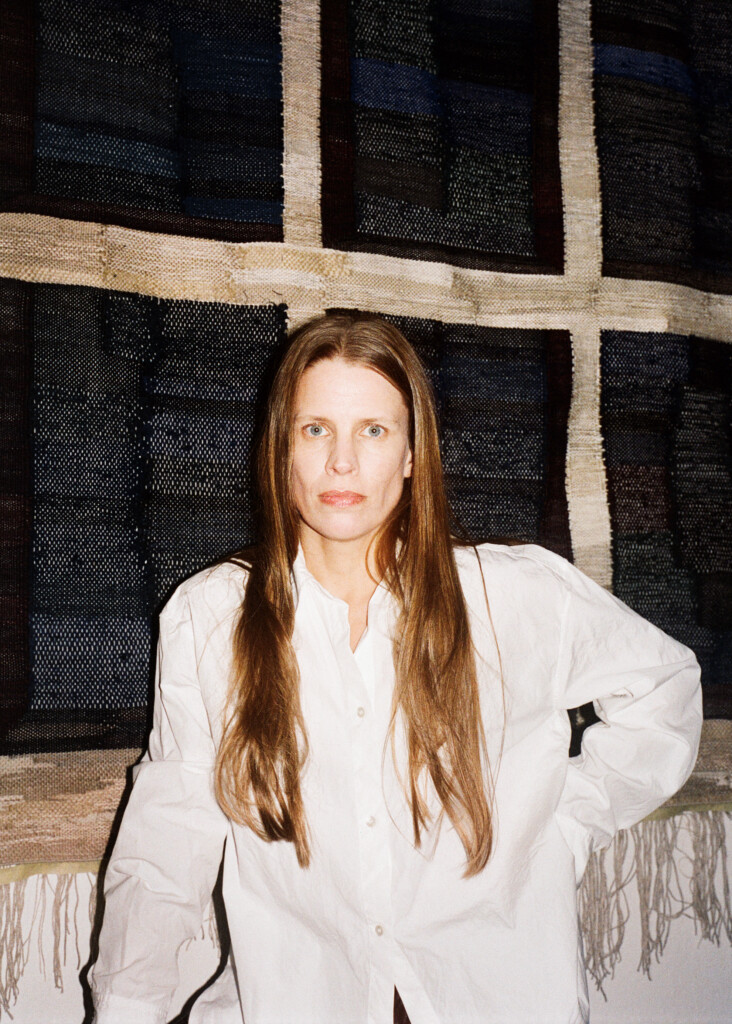
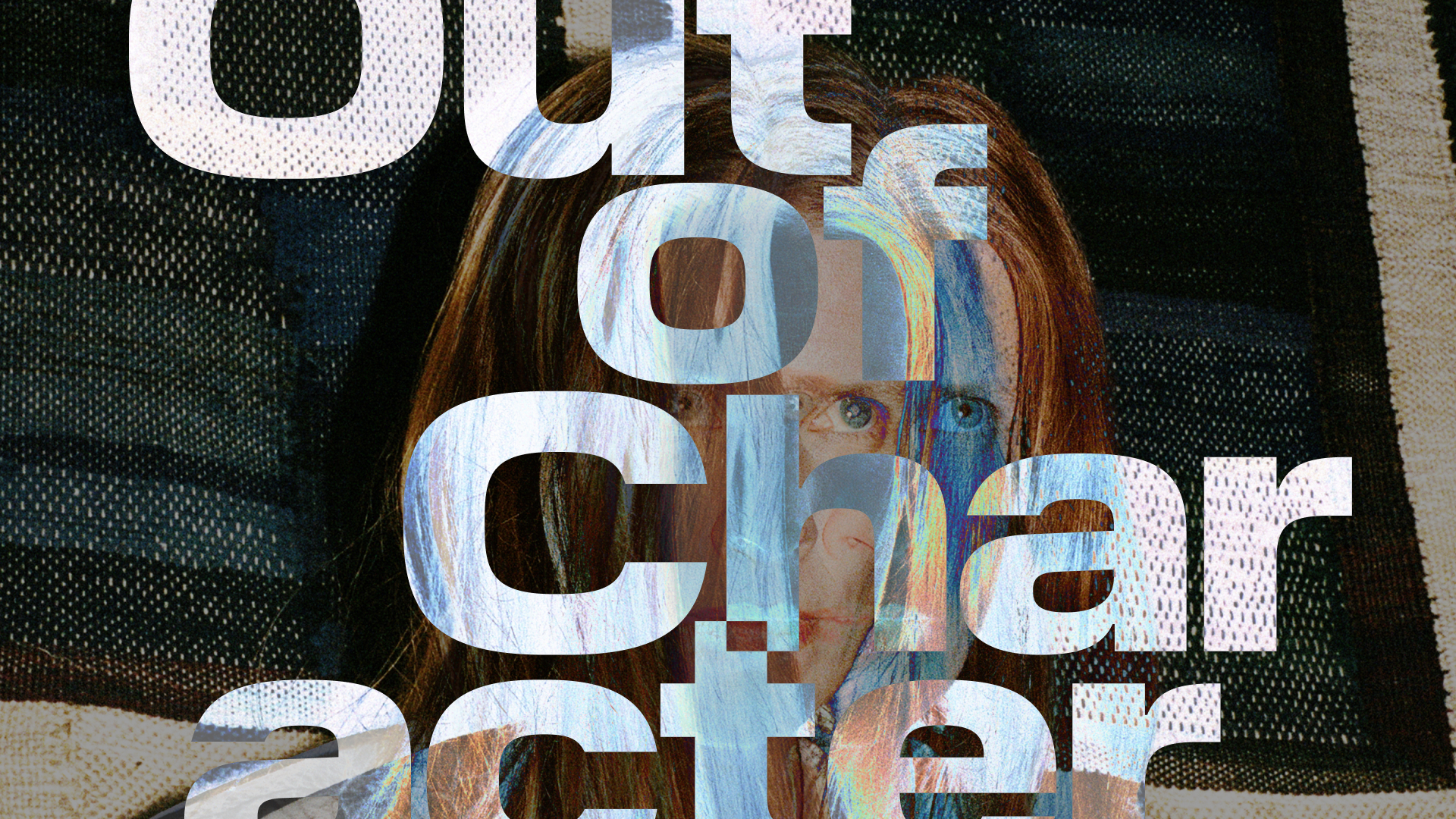 Linnéa Sjöberg's exhibition 'Out of Character' is presented 14 March – 14 June 2026. Portrait by Märta Thisner.
About the exhibition
Sjöberg often uses herself as material. Through year-long performative projects, she takes on different roles to explore how a personality is created and lived in practice. In the work GTD4s810 (pronounced “getting things done for Satan”) (2009–2011), Sjöberg explored the potential power and social rules associated with physical appearance. Over the course of a year and a half, she radically changed her appearance into that of a business woman, an illusion she maintained day and night. In Salong Flyttkartong (2012–2014), Sjöberg instead took on the role of tattoo artist. With a tattoo machine as her tool and temporary locations as her salon, Sjöberg travelled around offering spontaneous tattoos in friends’ homes, at festivals, and at the Athens Biennale. The artist’s body and the skin of others became traces of actions situated between the permanence of the tattoo medium and the spontaneity of the performance act. After these performative phases, she creates physical works in the form of weavings, collages, and installations where textiles, clothing, and personal objects become part of an archive of memories and layers of life. Works made in relation to GTD4s810 and Salong Flyttkartong are scattered throughout the exhibition and represent Sjöberg’s identity shifts into two fundamentally different characters.
Her works, dealing with themes such as heritage, loss, and class, often relate to her family history and upbringing in northern Sweden. In Sjöberg’s artistic practice, art and life are literally interwoven, bearing traces of work, transformation, and time.
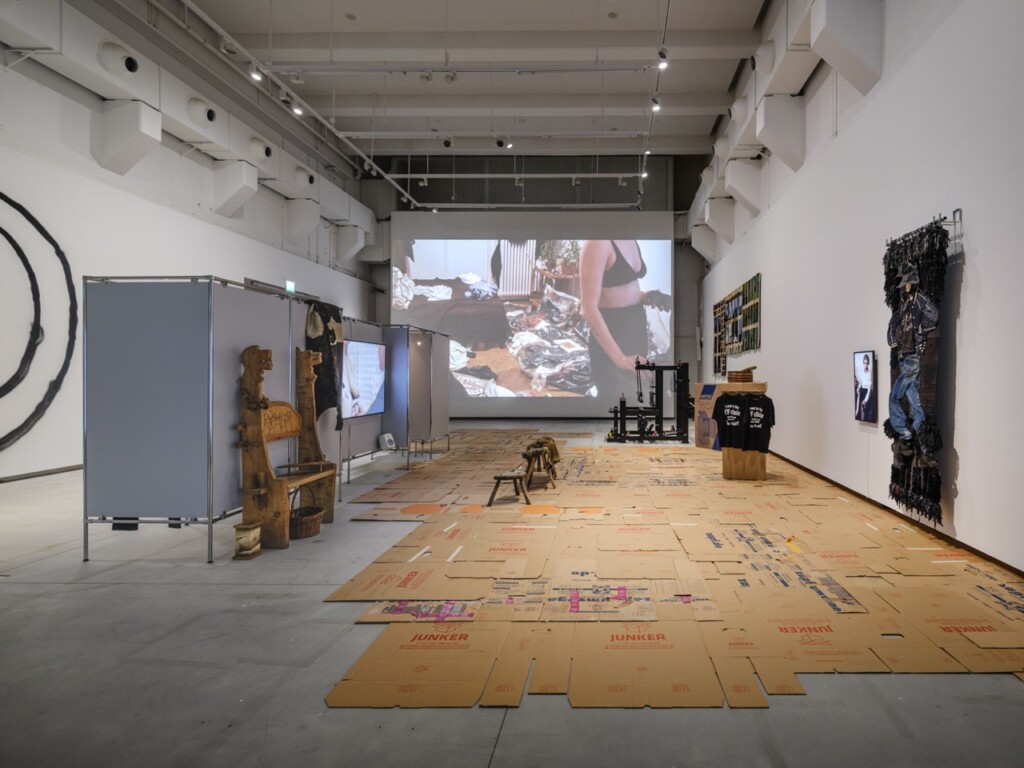
Works in the exhibition
BAD VIKING
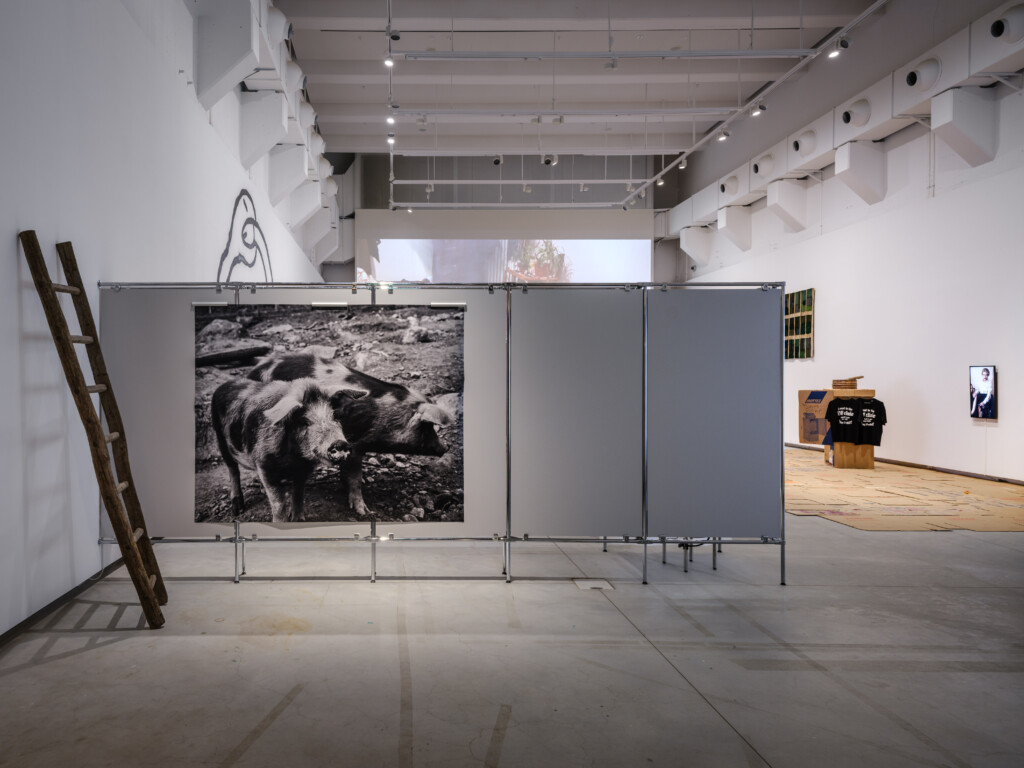
Grisarna, 2018
Bad Viking, 2018
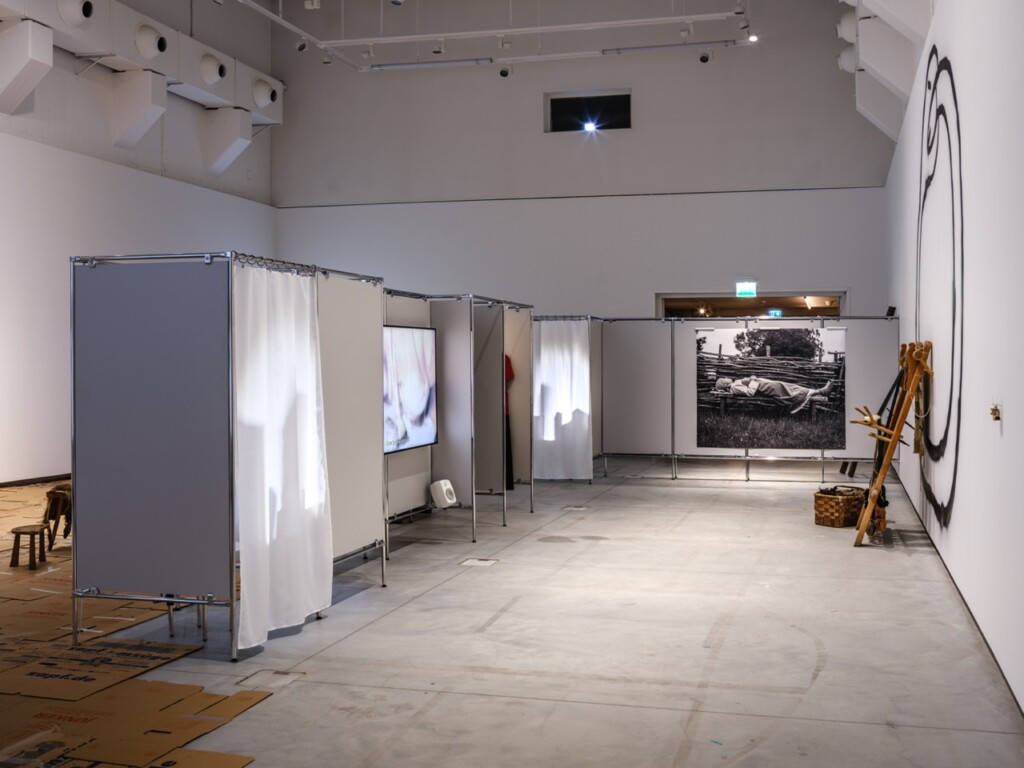
Bad Viking vilar, 2018
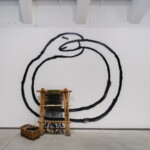
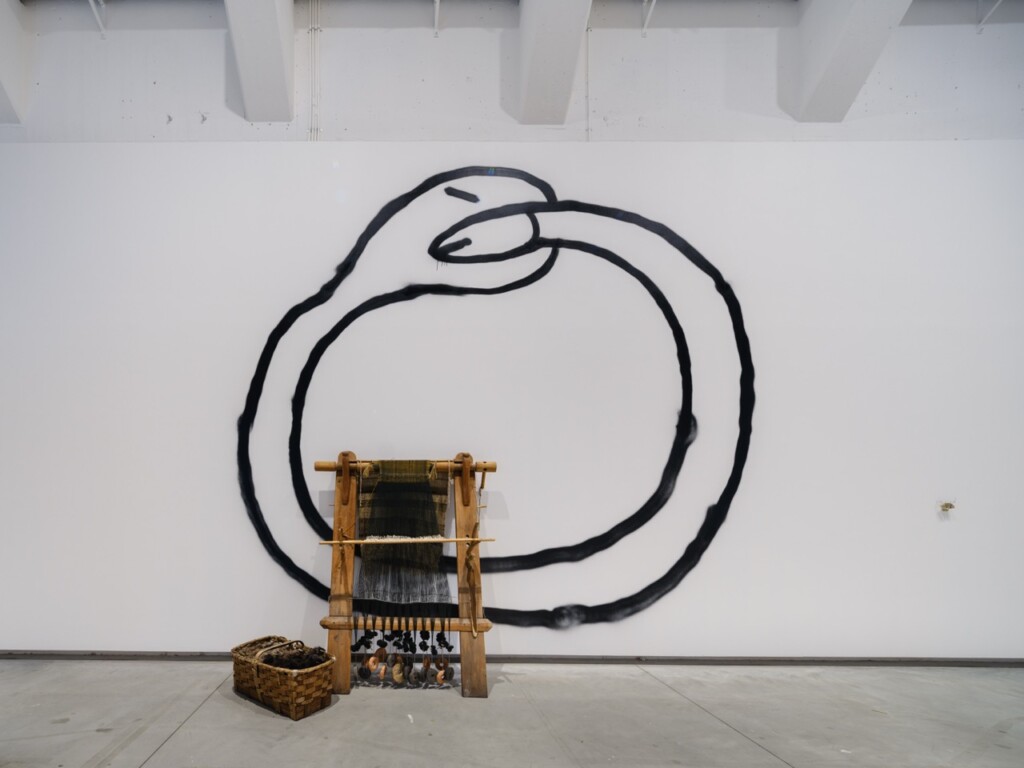
Sjöberg’s curiosity about older Scandinavian weaving techniques sparked a desire to work with a warp-weighted loom. To gain access to one, she took on the role of a Viking woman in the reconstructed Viking village Gunnes Gård in Upplands Väsby, where farm life of the late Iron Age is recreated. In the series of works BAD VIKING, Sjöberg explores the idea of reenactment. Historical reenactments stage the past through specific, fictional identities, shaped by clothing, language, actions, and social rules over a limited period of time.
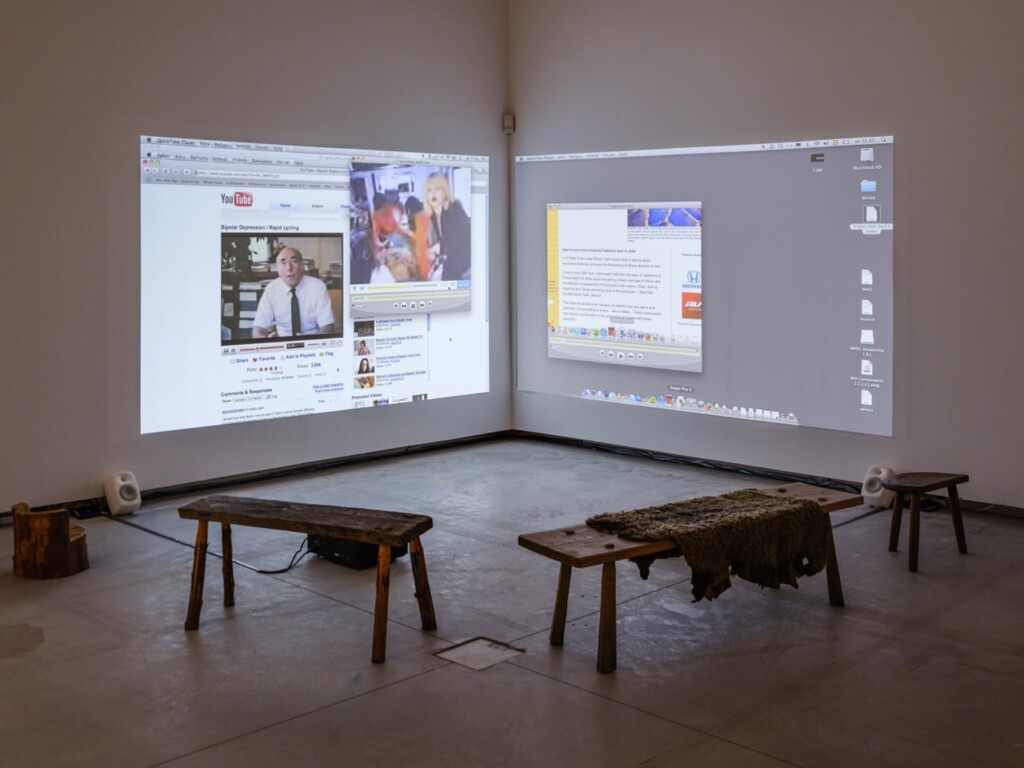
Dead Stars, 2009
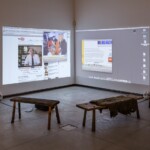
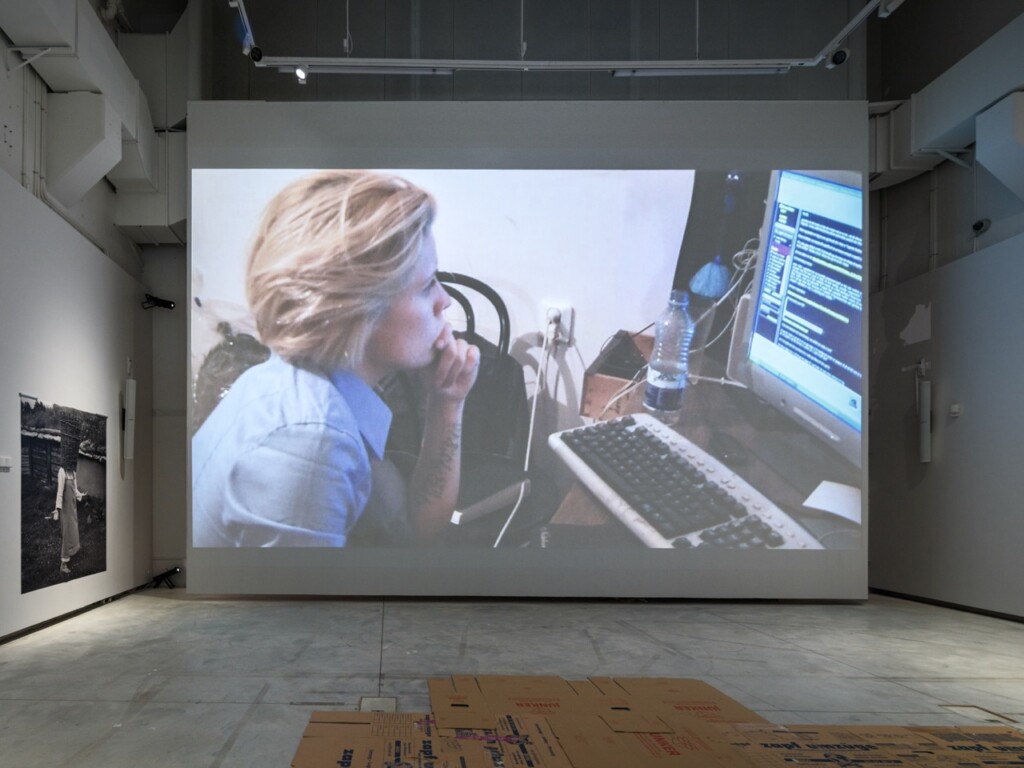
In Dead Stars, Sjöberg formulates the method that would later become central to her artistic practice: identity, tropes, and myth are treated as intertwined languages rather than separate entities. The work consists of two screen recordings of her digital workspace and moves between the cosmic and the psychological, between fact and fiction. The title is a reference to lithium—a substance that is found in dying stars and is also prescribed to treat bipolar disorder—connecting cosmic processes with physical and emotional states.
Provhytter, 2026
Letrozol, 2026
Menopur, 2026
Many of Me, 2026
The installation Provhytter is a new work of art created from standardised fitting rooms, which also function as exhibition architecture. The closed fitting rooms display a new series of works that appear as shadow plays on the curtains. The works are based on experiences of infertility and the practical reality of IVF treatments, which involve medical procedures and the continuous intake of pharmaceuticals. Sjöberg describes the situation as an involuntary entry into a role characterised by shame and a strong feeling of inadequacy—a nightmarish state where time seems to stand still and forward movement is replaced by circular motion.
Flyttkartonggolv, 2026
Ormkuken, 2026
Salong Flyttkartong was temporarily set up in various locations using moving boxes as part of the scenography. During this process, the motif Ormkuken was introduced and reappeared in the locations where the salon was established, as well as in the exhibition at Accelerator. The motif is an ouroboros, a symbol of a snake or dragon consuming its own tail.
Material related to Salong Flyttkartong can be found in the open fitting rooms entitled Many of Me. The book SALONG FLYTTKARTONG was produced for the work Salong Flyttkartong, published in 2014 and is available to read in the exhibition space.
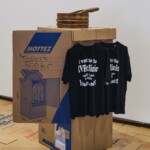
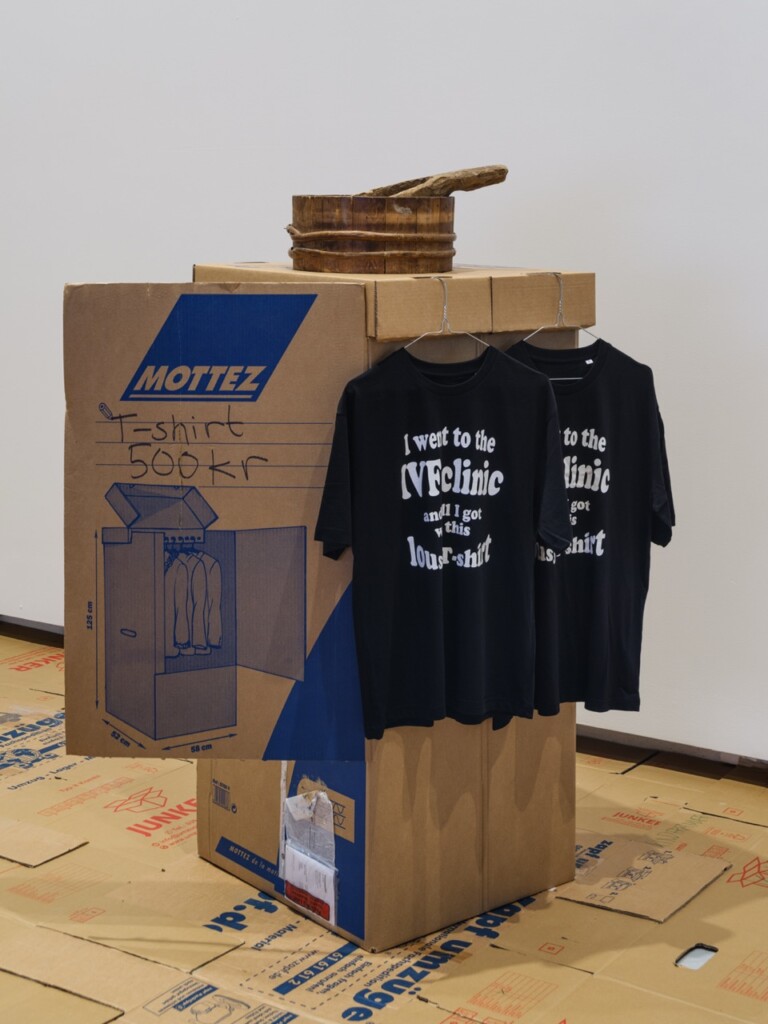
I went to the IVF clinic and all I got was this lousy T-shirt, 2026
A cardboard wardrobe with printed T-shirts has been placed on Flyttkartongsgolv. The installation is a commentary on the IVF industry, where expectations and disappointments are packaged as consumable services and products. With this work, Sjöberg wants to address her feelings of powerlessness during the IVF process.
The T-shirt is available for purchase at Accelerator’s reception desk.
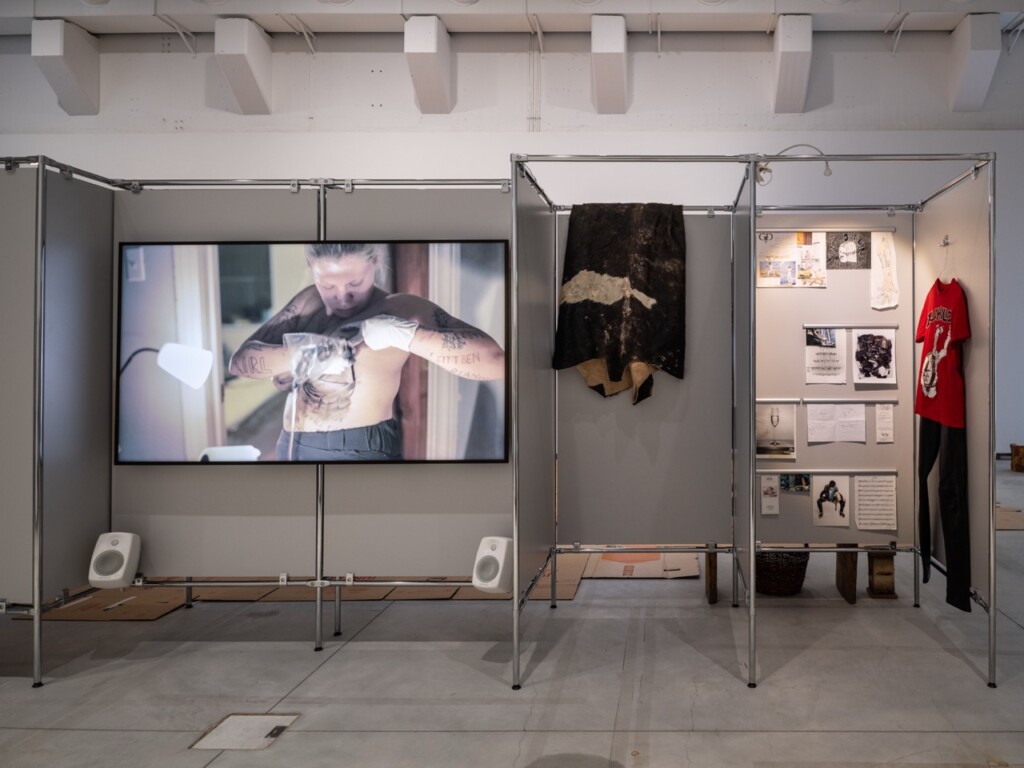
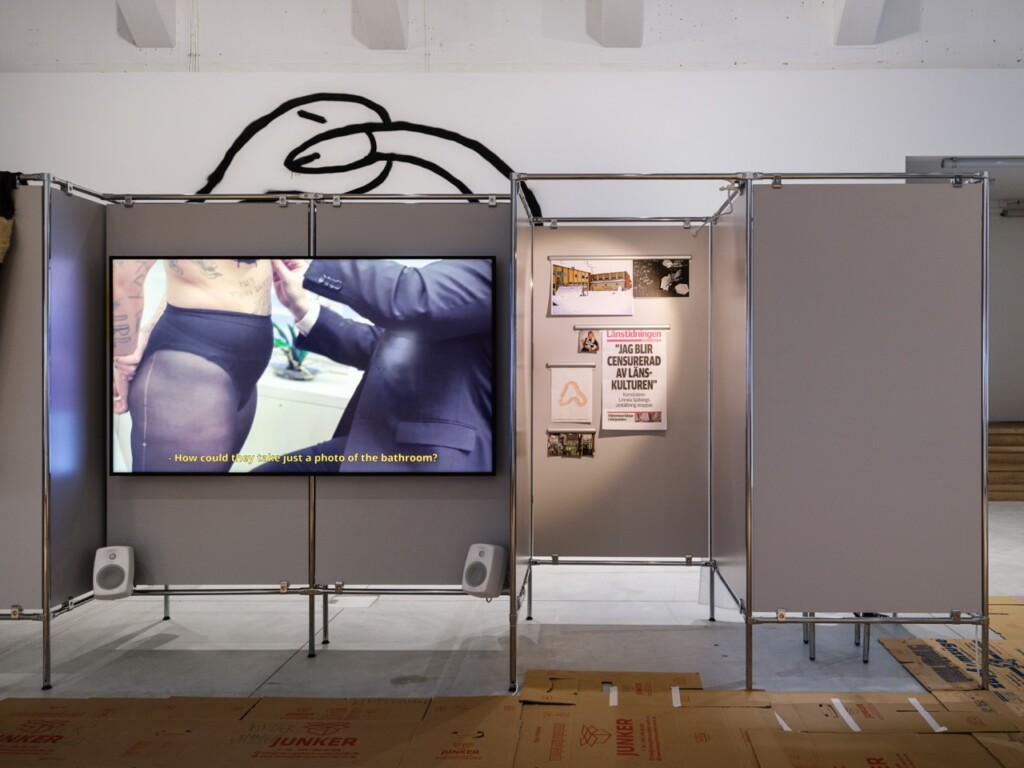
Between These Lines, 2012/2026
The events in these films take place in a transition between the works GTD4s810 and Salong Flyttkartong. Sjöberg visited a clinic in New York City where she had a plastic surgeon draw the incision lines for breast augmentation on her body—not in order to have the operation, but for the purpose of making these specific markings. Using the lines as a template, she then tattooed them onto herself. Sjöberg sees the tattooed lines as a manifestation of a male concept of the perfect woman.
Armour for Linnéa, 2010
GIF animation by Cellulite Rose
During the GTD4s810 project, others’ behaviour towards Sjöberg was influenced by her acting according to her own ideas of a business woman. She herself felt that a myth had emerged around her. During an exchange term at the art academy in Vienna, another student sent her a
GIF animation. It illustrates the speculation surrounding the business woman’s secrets and highlights the sleeves of the blouse she wears to hide tattoos on her arms—arkings that do not fit the image she was trying to project at the time.
Sexy Weaver, 2026
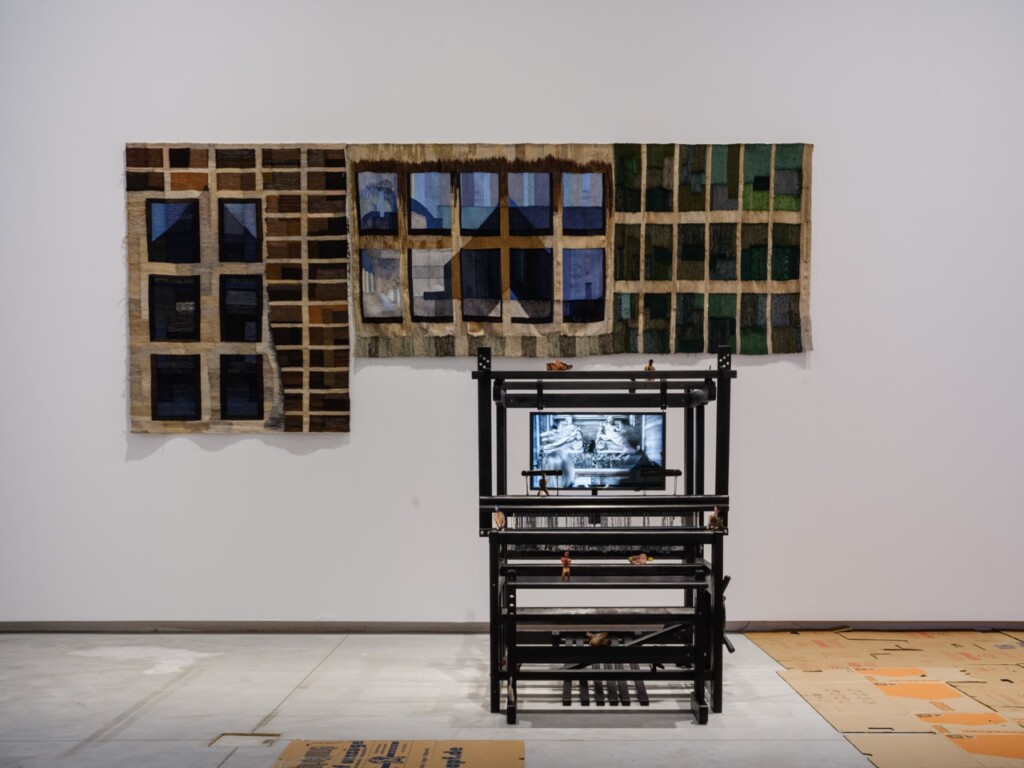
BDSM is an umbrella term that stands for bondage/discipline, dominance/submission and sadomasochism. In Sexy Weaver, the loom becomes a platform for paper doll-like cutouts. The images were taken by Sjöberg during bondage sessions exploring power exchanges. The installation also serves as a display area for a separate video work: Justice.
Justice, 2011–2026
As GTD4s810 was in progress, Sjöberg visited the monument to Pope Paul III in St. Peter’s Basilica in the Vatican. The monument by Guglielmo della Porta shows the pope enthroned above
the allegorical figures of Justitia (Justice) and Prudentia (Prudence). Justitia, who according to tradition represents Paul III’s beautiful sister Giulia Farnese, was originally naked. During the Counter-Reformation, this was considered inappropriate, and she was covered with a clumsily added, tunic-like drapery in white metal. Sjöberg is interested in how covering the naked figure made it more sexualised and mythical. She is also interested in stories where people paid guards to see and sketch the figure and their impulse to carve words into its surface.
Fenster Gucken 1, 2025
Fenster Gucken 2, 2025
The motifs in these tapestries are facades with windows, seen from the inside and out. Sjöberg describes the window as a portal between the interior and the exterior—like an eye.
Action, 2016/2022
In the Flower Fields (PANIK), 2019
Deathbed Visions, 2017/2024
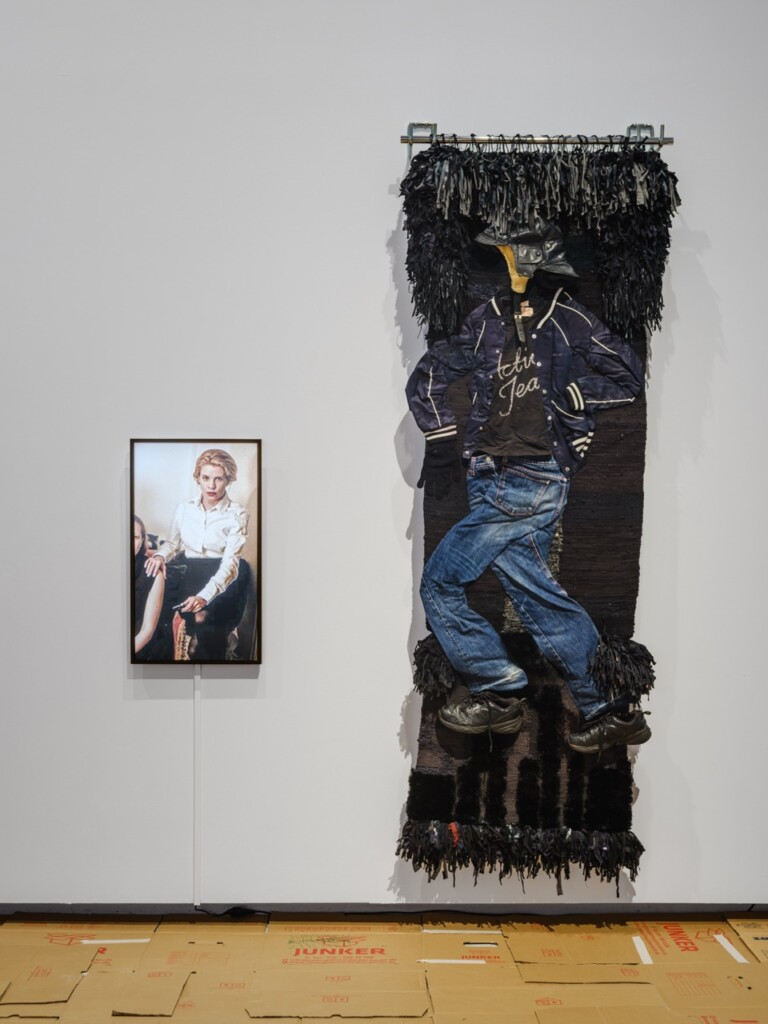
For Sjöberg, weaving functions as a textile archive where fragments of previous performative projects, personal memories and historical references are brought together. The methodical process of weaving creates an introspective place for recovery after periods of extroverted performance.
Action and In the Flower Fields (PANIK) are self-portraits—
silhouette tapestries of clothes that Sjöberg wore during distinct style periods. Deathbed Visions shifts the perspective towards the artist’s family history; the tapestry is mainly made of VHS tapes, with her father’s work gloves attached on top.
Vacuum Packaging, 2009/2026
The film was created at the beginning of GTD4s810, when Sjöberg stepped into the role of a business woman—a period she describes as marked by self-censorship. By vacuum packing the attributes of her former life, she renounces the clothes and jewellery that mark social belonging and project a different identity. For Sjöberg, the messy room reflects an inner self she wants to hide behind the exterior of the business woman.
Make a Gold, 2016
The work is part of the performance piece GTD4s810, described in Between These Lines. The sculpture is composed of objects detached from the business woman’s clothes and accessories and strung on a bra underwire.
The Berlin Experience featuring, 2026–2026
Inälvornas Dans / Neck
Inälvornas Dans / Fine Lines
Inälvornas Dans / J.P Pupa
Inälvornas Dans / Wet Punk
Inälvornas Dans Mit Strass
Inälvornas Dans Fur
Foam rubber figures by Florian Loycke, Hemli Puppentheater, Berlin.
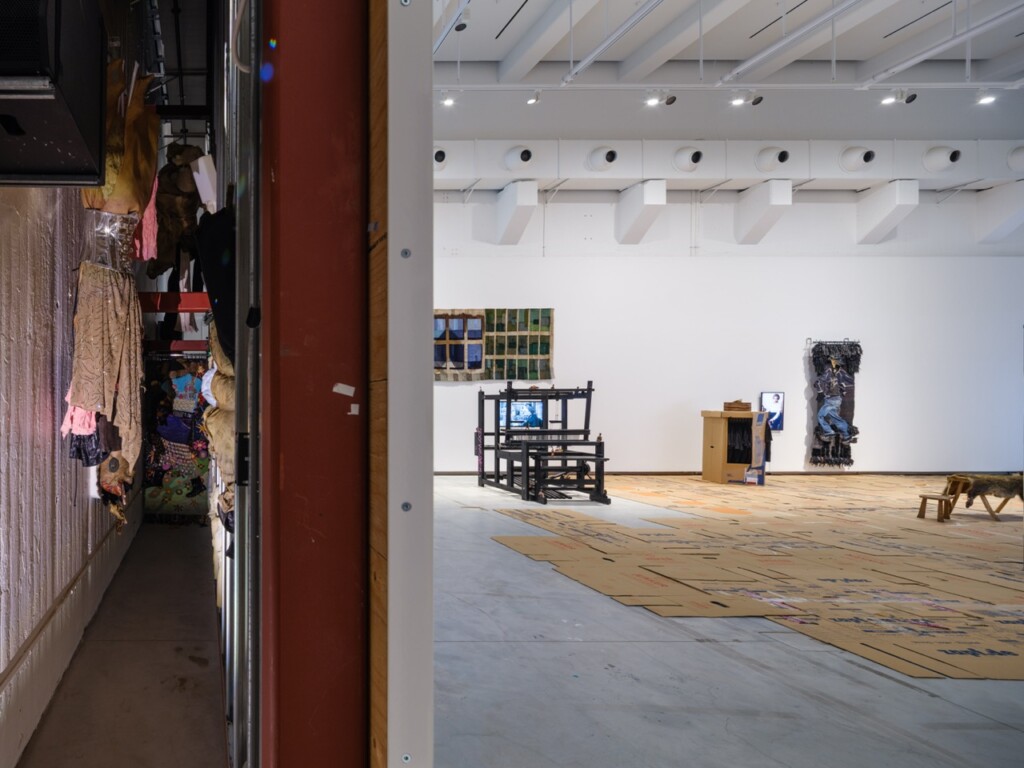
The series consists of clothing, wood, jewellery, fur and other everyday materials that the artist has collected, often with personal connections to her life and childhood. These are encased in wet cowhide, which takes on its final form once dry. At Accelerator, Inälvornas Dans is installed in a cramped, hidden space at the far end of the exhibition, accessible to only a few visitors at a time.
About Linnéa Sjöberg
Linnéa Sjöberg was born in 1983 in Strömsund. Her artistic practice centres on identity, memory, and social structures. She holds a master’s degree from the Royal Institute of Art in Stockholm. She lives and works in Stockholm and Berlin.
Sjöberg’s works have been exhibited at several Swedish and international institutions, including Göteborgs Konsthall, Magasin III, Bonniers Konsthall, Fullersta Gård, NEST The Hague, the Athens Biennale, and the galleries Steinsland Berliner, Stockholm, Company Gallery, New York, and Galerie Martin Janda, Vienna. In 2018, she received the Maria Bonnier Dahlin grant. Through Accelerator’s collaboration with the Royal Swedish Academy of Sciences, Linnéa Sjöberg is artist in residence at the Anthropocene Laboratory during spring 2026.
Credits
Curator: Richard Julin
The artist would like to thank Cellulite Rose, Lo Vahlström, Shawna Ferreira, and Gunnes Gård Viking Village.